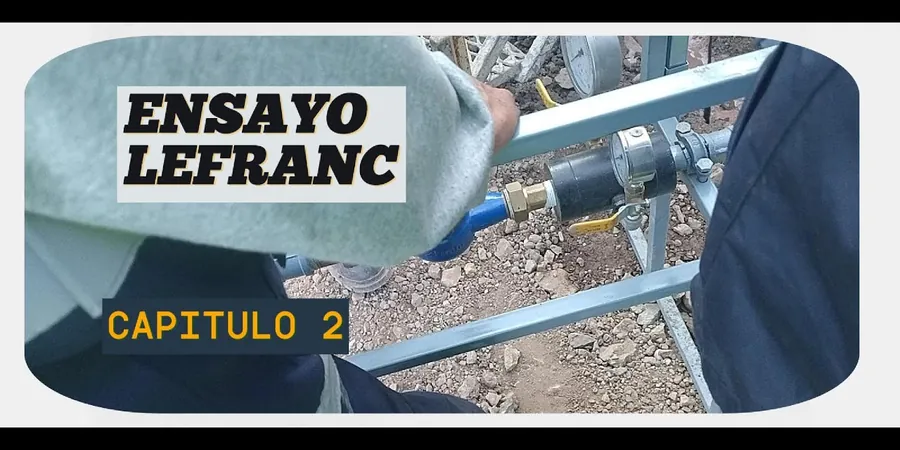
Arlington sits on a complex transition zone where the Eagle Ford Shale meets younger alluvial deposits from the Trinity River tributaries. The Johnson Creek floodplain cuts through north Arlington, creating pockets of sandy loam that drain fast, while the weathered shale south of I-20 holds water differently. This variability matters when you are designing retention ponds for the Entertainment District or dewatering a deep excavation near AT&T Stadium. A standard borehole log gives you material description, but it does not tell you how fast water actually moves through the formation. That is where a field permeability test becomes essential. We run both Lefranc tests in soil and Lugeon tests in fractured rock following ASTM D4630 and D4631 protocols. The data feeds directly into seepage analyses, cutoff wall design, and pump sizing for construction dewatering across Tarrant County's variable lithology.
A Lugeon value above 10 Lu in Arlington shale indicates fracture flow that standard borehole logging will miss entirely.
Quick answers
How much does a field permeability test cost in Arlington, TX?
A single Lefranc or Lugeon test in a standard borehole typically runs between US$700 and US$960, depending on depth, access conditions, and whether a packer setup is required. Mobilization, drilling subcontractor costs, and multi-level testing programs are quoted separately based on the scope of work.
When should I specify a Lugeon test instead of a Lefranc test?
Use the Lefranc method in soil or heavily weathered rock where the borehole wall is stable enough to maintain an open test cavity. Specify a Lugeon test with packers when you need to measure hydraulic conductivity in competent but fractured rock, especially where fracture flow dominates and you want to isolate specific depth intervals to guide grouting or cutoff wall design.
How many pressure stages are required for a valid Lugeon test?
The standard procedure follows a five-stage cycle: low, medium, high, medium, low pressure. This pattern reveals whether the fracture system dilates or erodes under higher pressures. The ratio between the first and last low-pressure stages indicates if the test has altered the flow path, which is critical for interpreting results correctly.