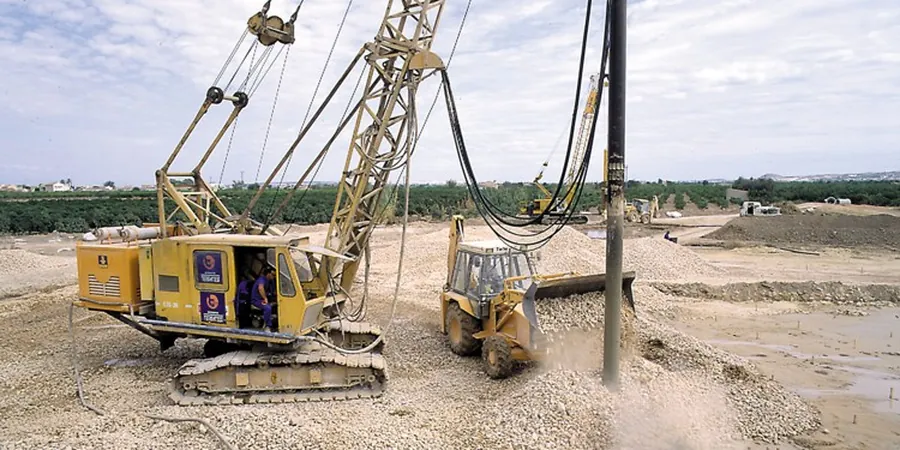
Arlington sits on the Eagle Ford Shale and Quaternary alluvium. The clay here swells. It shrinks. It heaves with every rain cycle. Standard footings struggle in this soil regime. We see plans that ignore these expansive clays. They fail. Stone column design offers a direct path through the problem. The method replaces 15 to 35 percent of the weak soil with compacted gravel columns. Load transfers to the stone. Settlement drops. Drainage improves. For sites near Lake Arlington or along Johnson Creek, groundwater is shallow. We often pair stone columns with a test pit investigation to confirm the stratigraphy before design. The Texas heat bakes the surface clay into brick-hard crust in August. That crust hides soft soil underneath. We probe it. We measure it. We design for what is really down there.
In Arlington's expansive clay, a stone column grid cuts settlement by half — without removing the soil.