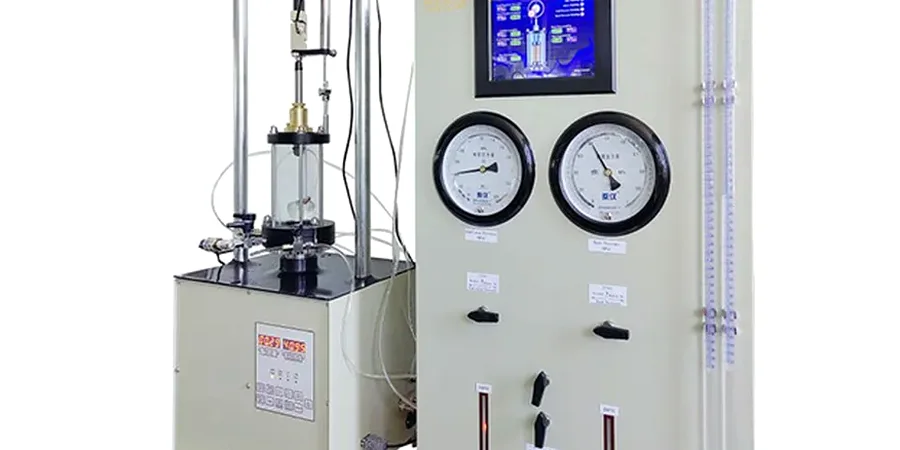
Laboratory testing forms the analytical backbone of virtually every construction and infrastructure project in Arlington, Virginia. This category encompasses the systematic evaluation of soil, rock, and aggregate samples to determine their physical and mechanical properties, ensuring that the ground beneath a proposed structure can safely support it. In a dense urban environment like Arlington, where redevelopment and infill construction are constant, understanding subsurface conditions through controlled lab work is not optional—it is a fundamental requirement for mitigating geotechnical risk. From foundation design to slope stability assessments, the data generated by these tests directly informs engineering decisions that protect both public safety and private investment.
Arlington’s geology presents a distinctive set of challenges that make precise laboratory analysis particularly critical. The county straddles the Fall Line, a transitional boundary between the harder crystalline bedrock of the Piedmont to the west and the softer, unconsolidated sediments of the Atlantic Coastal Plain to the east. This means a single project site can encounter highly variable materials, from weathered schist and gneiss with significant mica content to interbedded layers of marine clay, silt, and sand. The presence of locally expansive clay lenses and residual soils that retain the fabric of their parent rock requires careful classification. An accurate grain size analysis (sieve + hydrometer) is often the first step in deciphering this complex depositional history, quantifying the distribution from coarse gravels down to microscopic clay particles that govern drainage and shrink-swell behavior.
Compliance with established standards is a non-negotiable aspect of laboratory work in this jurisdiction. All testing procedures must adhere to the specifications set forth by ASTM International, which are universally referenced in local building codes and project specifications. Common standards include ASTM D422 for particle-size analysis and ASTM D4318 for Atterberg limits, a test that defines the critical water contents at which fine-grained soils transition between liquid, plastic, and semisolid states. These Atterberg limits are essential for correlating with engineering properties like compressibility and shear strength. Furthermore, laboratories are often required to meet the validation and quality control criteria of the AASHTO Materials Reference Laboratory (AMRL) program, ensuring that results are legally defensible and technically reproducible for public works projects.
The scope of projects in Arlington demanding comprehensive laboratory testing is broad. High-density mixed-use developments in corridors like Rosslyn-Ballston require precise bearing capacity and settlement analyses to guide deep foundation design. Infrastructure upgrades by Arlington County, such as stormwater management facilities and utility trench backfill specifications, rely on standard Proctor tests and permeability assessments. Even residential additions on the county's characteristic rolling hills may trigger the need for laboratory evaluation to satisfy local building officials that expansive soils won't threaten structural integrity. A detailed grain size analysis is routinely paired with hydrometer testing to fully characterize the fine fraction that most influences a soil's engineering behavior, providing a complete picture that simple field classification cannot achieve.
Field observations provide initial classification but lack the quantitative precision needed for engineering design. Laboratory testing measures fundamental properties like shear strength, compressibility, and permeability under controlled conditions. In Arlington, where Fall Line geology creates highly variable soils, lab data is essential to distinguish problematic expansive clays from stable residual soils, ensuring foundation designs account for actual material behavior rather than visual estimates.
The required sample type depends on the planned tests. Disturbed samples, collected in sealed bags, are suitable for index property tests like grain size analysis and Atterberg limits. Undisturbed samples, carefully extracted using thin-walled Shelby tubes, are mandatory for measuring shear strength and consolidation characteristics. Arlington's prevalent cohesive residual soils often allow for the successful recovery of relatively undisturbed samples for advanced strength testing.
ASTM International standards are the primary reference for testing methods in Arlington, cited directly in the Virginia Uniform Statewide Building Code. Laboratories must follow specific procedures, such as ASTM D422 for particle-size analysis and ASTM D4318 for Atterberg limits, to ensure consistency and legal defensibility. Adherence to these standards, often verified through AMRL accreditation, is mandatory for test results to be accepted by local building officials and project engineers.
Turnaround time varies with the testing suite and laboratory workload. Basic index tests like a sieve and hydrometer analysis and Atterberg limits may be completed within 3 to 5 business days after sample receipt. However, consolidation or triaxial shear tests require longer saturation and loading phases, potentially extending the schedule to 2 or 3 weeks. Expedited services are commonly available to align with tight construction timelines in Arlington's fast-paced development market.