Seismic engineering in Arlington, Virginia, encompasses a specialized suite of geotechnical and structural services aimed at mitigating earthquake risks for buildings, infrastructure, and lifelines. While the region is not synonymous with high seismicity like the West Coast, Arlington's proximity to the Central Virginia Seismic Zone and historical events such as the 2011 Mineral earthquake underscore the importance of preparedness. This category addresses the full lifecycle of seismic hazard management—from subsurface characterization and ground response prediction to innovative design strategies that protect both new developments and retrofitted structures. For stakeholders navigating the complexities of urban construction on the Atlantic Seaboard, integrating seismic considerations early in the project lifecycle is no longer optional but a prudent engineering standard.
The local geology of Arlington plays a pivotal role in shaping seismic demands. Much of the county is underlain by the Piedmont physiographic province, characterized by weathered residual soils, saprolite, and metasedimentary bedrock of the Appalachian orogenic belt. These soil profiles can amplify ground motions during an earthquake, particularly in areas with thick deposits of soft alluvium or artificial fill along the Potomac River terraces. A thorough soil liquefaction analysis becomes critical in zones with shallow groundwater, where loose, saturated sands may lose strength and deform, threatening foundations and buried utilities. Understanding these local conditions through site-specific investigation is the cornerstone of any resilient seismic design.
Arlington's regulatory framework for seismic design aligns with the Commonwealth of Virginia’s adoption of the International Building Code (IBC), which references ASCE 7 for seismic provisions. The county is assigned a moderate seismic design category in most locations, requiring compliance with detailed site classification and ground motion parameters. Projects must adhere to the Virginia Uniform Statewide Building Code (USBC), which mandates seismic evaluations for essential facilities, schools, and structures exceeding certain occupancy thresholds. A precise seismic microzonation study can help developers refine the generalized hazard maps from the USGS, translating regional probabilistic assessments into site-specific design spectra that account for local soil amplification and topographic effects, thereby optimizing structural requirements and material costs.
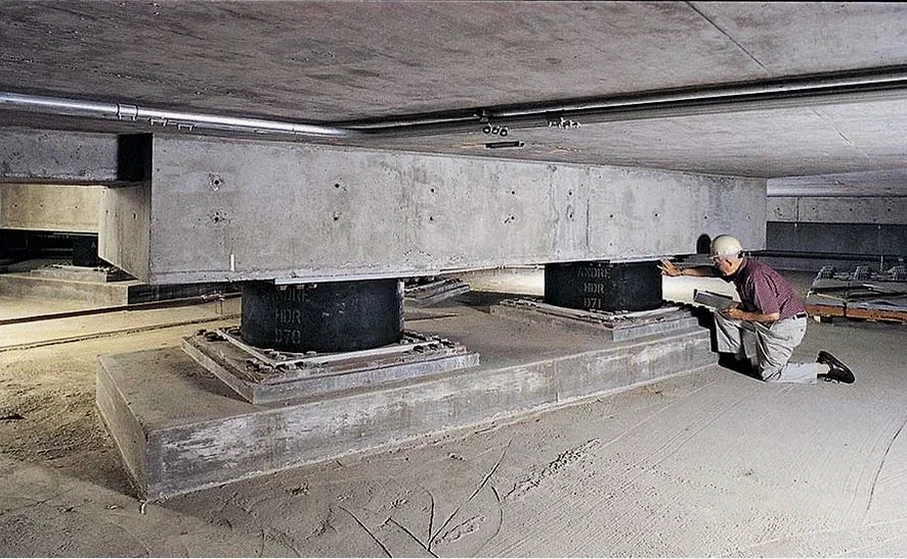
The types of projects that demand these services are diverse and growing. High-density residential towers in Rosslyn and Crystal City, critical federal facilities in the National Capital Region, and transportation infrastructure like the WMATA Metro system all require rigorous seismic analysis. For heritage structures or buildings with sensitive equipment, base isolation seismic design offers a performance-based solution that decouples the superstructure from ground motion, significantly reducing drift and acceleration. Whether it’s a new data center requiring operational continuity after a design-basis earthquake or a bridge retrofit along the George Washington Memorial Parkway, seismic services ensure that Arlington's built environment meets modern safety and performance expectations.
Seismic engineering involves designing structures to resist earthquake forces through geotechnical investigation and structural analysis. In Arlington, although seismicity is moderate, the Central Virginia Seismic Zone and local soil conditions can amplify ground shaking. Protecting dense urban infrastructure, federal assets, and essential facilities from potential damage makes seismic considerations a critical component of responsible development and long-term resilience planning.
Arlington's Piedmont geology includes residual soils, saprolite, and alluvial deposits that can significantly amplify seismic waves. Soft soils and shallow groundwater near the Potomac River may increase shaking intensity and introduce hazards like liquefaction. Site-specific geophysical testing and soil classification per ASCE 7 are essential to predict how local stratigraphy will modify bedrock motions and influence structural design loads.
Seismic design in Arlington follows the Virginia Uniform Statewide Building Code (USBC), which adopts the International Building Code (IBC) and references ASCE 7 for seismic provisions. These codes define seismic design categories based on occupancy and site class, requiring specific analysis and detailing. Essential facilities and high-occupancy structures face stricter mandates to ensure life safety and operational continuity.
Projects including high-rise residential towers, critical federal buildings, hospitals, schools, and major infrastructure like bridges and transit systems require detailed seismic hazard analysis. A microzonation study is particularly valuable for large-scale developments or when optimizing designs in areas with variable subsurface conditions, helping engineers refine site-specific ground motion parameters beyond generalized national seismic hazard maps.