← Home · Slopes & Walls

Retaining Wall Design in Arlington, TX — Geotechnical Engineering for Expansive Soils

Together, we solve the challenges of tomorrow.

LEARN MORE →

Arlington sits squarely on the Eagle Ford Formation. This geological unit is notorious for highly plastic, expansive clays. The shrink-swell potential here can exceed a PI of 35. That means lateral earth pressures fluctuate dramatically with seasonal moisture. A standard gravity wall design fails quickly in these conditions. Our team integrates site-specific test pits to assess the active zone depth. We verify soil classification in our lab per ASTM D2487. The design then accounts for a swelling pressure that often surpasses 10 kPa. That data dictates the reinforcement and drainage strategy. Without it, you are guessing. And with Arlington's rapid development, guessing leads to costly failures.

In Arlington's expansive Eagle Ford clay, a retaining wall without a proper drainage system is just a temporary structure waiting to fail.

Methodology and scope

North Texas weather punishes retaining structures. Intense summer droughts followed by torrential spring rains create a brutal wet-dry cycle. The clay desiccates and cracks. Then it expands violently upon re-wetting. Our design philosophy counters this with solid drainage. We specify granular backfill zones and filter fabrics. For taller walls, we move beyond cantilevered designs. A mechanically stabilized earth (MSE) wall using geogrid reinforcement is often the optimal solution here. It accommodates some differential movement without structural distress. We also perform global stability analysis for slopes behind the wall. The goal is a structure that works with the soil, not against it.
Retaining Wall Design in Arlington, TX — Geotechnical Engineering for Expansive Soils
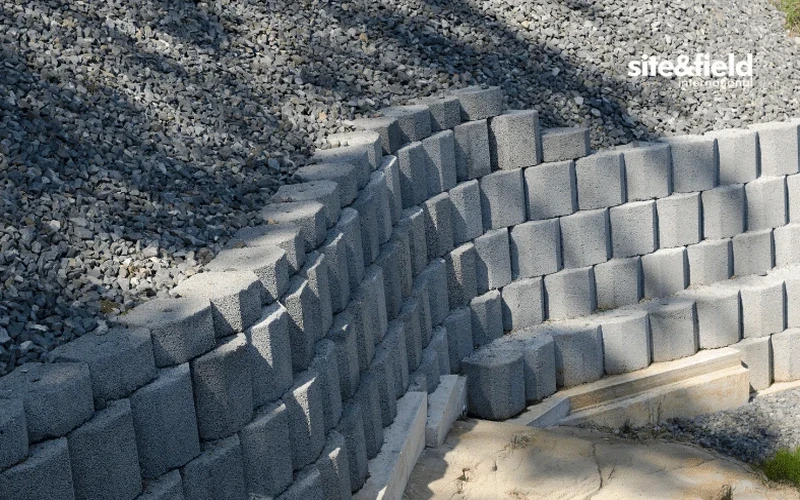
Technical reference image — Arlington

Local geotechnical context

Arlington's population has surpassed 400,000. The construction pressure is immense, pushing projects into marginal land. Fill soils are common, and undocumented fills are a major hazard. These materials consolidate unevenly. The biggest risk by far is differential settlement behind the wall. It causes cracking, leaning, and eventual collapse. We mitigate this through rigorous compaction control. We require in-situ density testing during backfill placement. Another risk is hydrostatic pressure buildup if weepholes clog in the clay. Our designs use chimney drains and outlet pipes sized for 100-year storm events. The cost of fixing a failed wall is easily triple the cost of getting the geotechnical design right the first time.

Need a geotechnical assessment?

Reply within 24h.

Email: contact@geotechnical-engineering.xyz

Typical values

ParameterTypical value
Active Zone Depth1.5 - 3.0 m
Soil Plasticity Index (PI)25 - 45
Design Swell Pressure10 - 30 kPa
Backfill Friction Angle30 - 34 degrees
Drainage AggregateASTM No. 57 Stone
Seismic Coefficient (kh)0.10 - 0.15
Minimum Wall Embedment0.6 - 1.0 m

Complementary services

01

Cantilever & Gravity Wall Design

Reinforced concrete wall design for heights up to 6 meters. We calculate active and at-rest earth pressures using Rankine or Coulomb theory. We detail the reinforcement to resist bending moments and shear at the stem-base interface.

02

MSE & Reinforced Slope Systems

Design of mechanically stabilized earth walls using geogrids or steel strips. We perform internal and external stability checks. This includes pullout resistance, connection strength, and global slope stability under both static and seismic conditions.

Relevant standards

ASCE 7-22 (Seismic Loads), IBC 2024 (Chapter 18: Soils and Foundations), ASTM D2487 (Soil Classification), ASTM D4318 (Atterberg Limits), ACI 318-19 (Structural Concrete)

Quick answers

What is the typical design life of a retaining wall in Arlington?

We design permanent walls for a minimum 50-year service life. This requires durable concrete per ACI 318 exposure class F2 for sulfate-rich Eagle Ford soils. The drainage system components must also resist chemical degradation and clogging.

How do you account for the expansive soil in the design?

We measure the swell pressure directly in the lab. The wall is designed as a 'yielding' system where possible. For non-yielding walls, we design for the full at-rest pressure plus the swell pressure. A compressible zone behind the stem wall is a technique we use to absorb the expansion.

Do I need a permit for a retaining wall in Arlington?

Yes. The City of Arlington requires a permit for walls taller than 4 feet, measured from the bottom of the footing to the top of the wall. Our designs are sealed by a licensed Professional Engineer in Texas and meet all city submittal requirements.

What does retaining wall design cost in Arlington?

Engineering fees for a residential retaining wall design in Arlington typically range from US$1.070 to US$3.800. The scope includes site investigation, lab testing, structural calculations, and signed PE plans. The final cost depends on wall height and complexity.
Location and service area

We serve projects across Arlington and surrounding areas.

View larger map