Together, we solve the challenges of tomorrow.
LEARN MORE →Foundations serve as the critical interface between any structure and the ground beneath it, transferring loads safely while resisting movement, settlement, and environmental forces. In Arlington, Virginia, where urban density meets variable subsurface conditions, a properly engineered foundation is not merely a construction phase—it is a long-term risk management decision. The category encompasses shallow systems like spread footings and mat slabs, as well as deep foundation solutions such as driven piles, drilled shafts, and micropiles. Homeowners, commercial developers, and infrastructure agencies alike depend on foundation expertise to protect assets against differential settlement, expansive soils, and the region's seasonal moisture fluctuations.
Arlington sits within the Piedmont physiographic province, underlain by deeply weathered metamorphic rock of the Appalachian Piedmont. The typical soil profile includes silty clays and sandy silts of the residual and colluvial origin, often with varying thicknesses of fill material across previously developed parcels. These soils exhibit moderate to high plasticity and can experience significant volume changes with seasonal wetting and drying cycles. Additionally, the depth to competent bedrock—commonly schist or gneiss—can range from less than 10 feet to over 60 feet, making site-specific geotechnical investigation essential before selecting a foundation type. Groundwater levels fluctuate and may be encountered at relatively shallow depths, particularly in low-lying areas near Four Mile Run or the Potomac River corridor.
All foundation design and construction in Arlington must comply with the Virginia Uniform Statewide Building Code, which adopts and amends the International Building Code. Chapter 18 of the IBC governs soils and foundations, requiring geotechnical investigations that characterize bearing capacity, lateral earth pressures, and settlement potential. Arlington County enforces additional grading and drainage standards through its local ordinances, particularly for sites exceeding certain disturbance thresholds. Seismic design criteria follow ASCE 7, with Arlington assigned to Seismic Design Category B or C depending on site class. Engineers must also adhere to ACI 318 for concrete foundations and AISC 360 for steel elements. Deep foundation work, including pile foundation design, must address both structural integrity and installation effects on adjacent properties, a frequent concern in Arlington's tight urban lots.
This category supports a broad spectrum of projects. Single-family residential additions and teardowns frequently require foundation underpinning or replacement when expanding into rear yards with undocumented fill. Mid-rise mixed-use buildings along the Rosslyn-Ballston corridor demand deep foundations to reach competent bearing strata while controlling excavation-induced movements. Institutional facilities, such as schools and government buildings, often combine mat foundations with pile foundation design elements to meet stringent settlement tolerances. Retaining walls, bridge abutments, and stormwater structures all fall within the foundation scope, each demanding analysis of sliding, overturning, and global stability. Even smaller projects like retaining walls and patio covers benefit from foundation evaluation when constructed on slopes or near property lines.
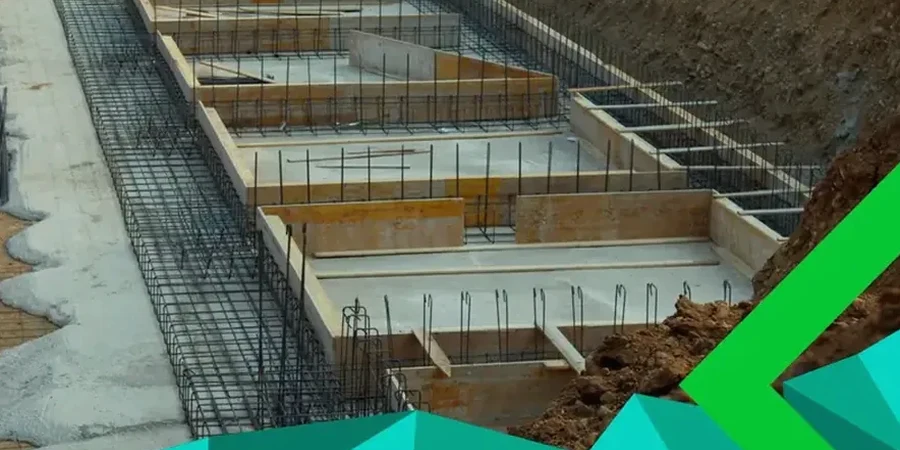
Arlington projects typically employ shallow foundations—spread footings, strip footings, and mat slabs—where competent bearing soils exist within 5 to 10 feet of grade. Where fill is thick or bedrock is deeper, deep foundations such as driven H-piles, drilled shafts, or micropiles are specified. The choice depends on soil bearing capacity, settlement sensitivity, groundwater conditions, and proximity to existing structures.
Arlington's variable Piedmont geology, with residual silty clays, colluvium, and irregular bedrock depths, makes site-specific subsurface data essential. The Virginia Uniform Statewide Building Code mandates geotechnical reports to establish allowable bearing pressures, predict settlement, and identify hazards like expansive soils or shallow groundwater. Without this investigation, foundation designs risk non-compliance and potential structural distress.
Arlington County enforces the Virginia USBC with local amendments addressing grading, drainage, and excavation near rights-of-way. Permits require sealed geotechnical and structural drawings. Projects exceeding certain earth disturbance thresholds must submit erosion and sediment control plans. Deep foundation installations, including pile driving, are subject to noise ordinances and vibration monitoring requirements to protect adjacent properties.
Common indicators include sticking doors or windows, diagonal cracks in drywall or brick veneer, sloping floors, and gaps between walls and ceilings. Exterior signs such as stair-step cracking in foundation walls or separation of chimneys from the main structure may signal differential settlement or expansive soil movement. A professional foundation inspection with elevation surveys and soil analysis is recommended to determine the cause and appropriate remediation.