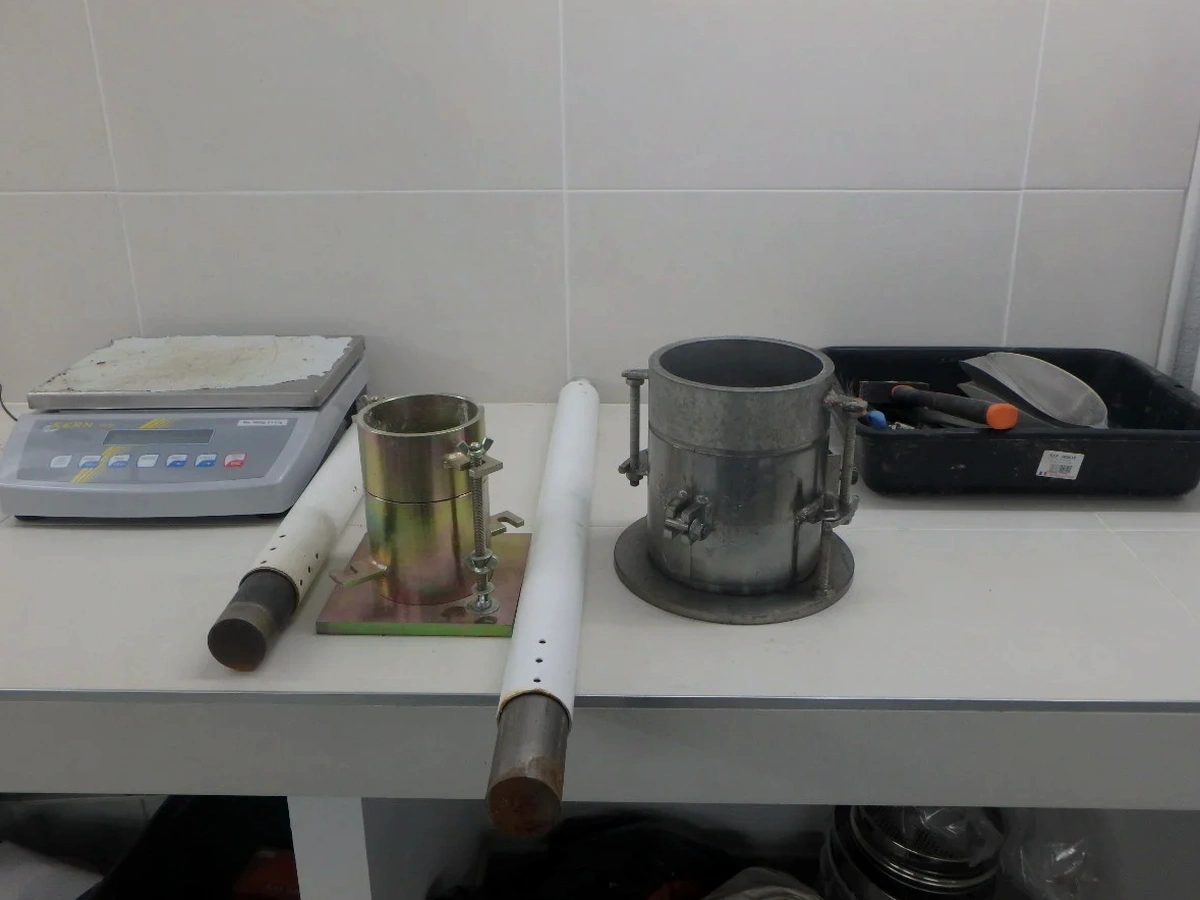
In Arlington, failing a compaction test is often a moisture issue, not just an effort problem. The Eagle Ford Shale weathered clays across Tarrant County hold water unpredictably. You can hit density but miss the moisture spec by two points. That gap causes shrink-swell damage later. Our lab sees this weekly. We run both Standard and Modified Proctor tests to define the compaction curve that matches your project spec—whether it’s a residential pad in Dalworthington Gardens or a commercial lot off I-20. Getting the right Proctor number early prevents rework. It also anchors your QC program. Pairing this data with a sand cone density test in the field gives you real-time compaction verification against the lab curve, closing the loop between design and construction.
A Proctor curve is unique to each borrow source. Using a generic value is the fastest way to fail a compaction spec in Arlington.
Quick answers
What does a Proctor test cost in Arlington?
Standard Proctor testing in Arlington typically runs between US$100 and US$210 per sample, depending on whether you need Standard (ASTM D698) or Modified (ASTM D1557) effort. A one-point rapid check falls toward the lower end. The full five-point Modified curve with oversize correction sits at the upper end. Turnaround is usually two business days.
Which Proctor method does Arlington require for building pads?
Modified Proctor (ASTM D1557). The City of Arlington and most structural engineers in Tarrant County specify Modified effort for any engineered fill supporting a foundation or pavement. Standard Proctor is reserved for landscape fills and non-structural backfill. Always check the project geotechnical report. The compaction spec will state the required test method and the minimum relative compaction—typically 95% of Modified Proctor maximum dry density for building pads.
How many Proctor tests do I need for my Arlington project?
One Proctor curve per borrow source, per soil type. If your site has both tan weathered shale and gray unweathered shale, you need two curves. If you import select fill from a different pit, that source needs its own test. For linear projects like trench backfill along Collins Street, we recommend a new Proctor every 5,000 cubic yards or whenever the material visibly changes. That keeps your QC defensible and your compaction crew on target.