← Home · Investigation

SPT Testing in Arlington, TX: Accurate Subsurface Data for North Texas Sites

Together, we solve the challenges of tomorrow.

LEARN MORE →

The shrinking and swelling clays under Arlington don’t forgive guesswork. This part of the Eastern Cross Timbers ecoregion layers stiff, overconsolidated clays over the Eagle Ford Shale, and seasonal moisture swings in Tarrant County can shift expansive soils by several inches. Standard Penetration Testing (SPT), run per ASTM D1586-18, gives us the blow count profile we need to separate competent shale from weathered clay zones. In our experience, combining the SPT data with Atterberg limits helps quantify the plasticity risk that drives most foundation movement claims around Arlington, while the triaxial test provides the drained shear strength parameters needed when designing deep foundations that bypass the active moisture zone entirely.

In Arlington’s expansive clays, a 2-foot change in SPT sampling depth can mean the difference between a 12-inch drilled pier and a 20-inch pier—the blow count tells that story.

Methodology and scope

The Arlington building code references the International Building Code with local amendments that require site-specific soil investigations for any commercial structure or residential addition over 500 square feet. ASTM D1586 governs our SPT procedure here, and we run it with an automatic trip hammer on a CME-75 rig to keep the energy ratio consistent. Core elements of the SPT program in Arlington include: sampling at 2.5-foot intervals through the upper expansive zone and at 5-foot intervals once we hit shale refusal; logging moisture content changes that correlate with seasonal rainfall patterns averaging 39 inches annually; and field classification per ASTM D2487 to catch thin sand lenses within the clay matrix. The N-value profile becomes the backbone of bearing capacity calculations and helps the structural engineer decide between a stiffened slab-on-grade or a pier-and-beam system.
SPT Testing in Arlington, TX: Accurate Subsurface Data for North Texas Sites
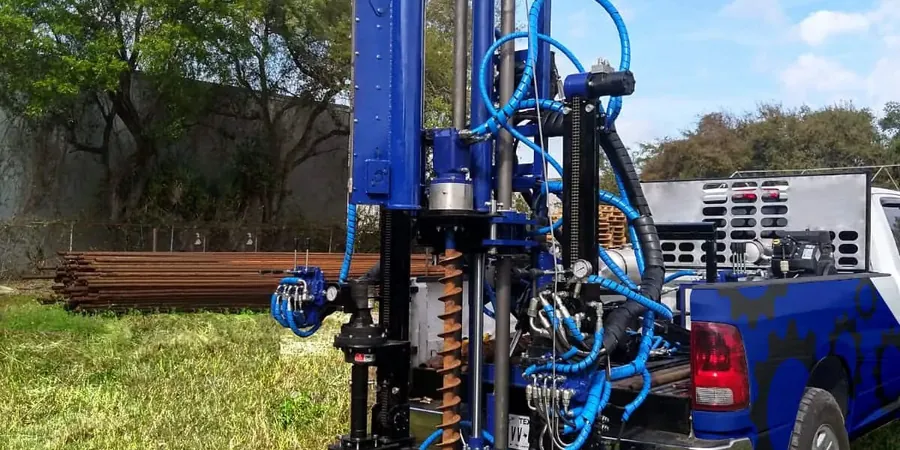
Technical reference image — Arlington

Local geotechnical context

Arlington sits on the transition between the Woodbine Formation sands to the east and the Eagle Ford Shale to the west, which means a single commercial lot can have both collapsible sandy fill and highly plastic clay within 100 feet. We have pulled up split spoons where the top 15 feet show weathered shale with N-values below 8—barely enough for a spread footing without soil replacement—and then hit unweathered shale at 22 feet with blow counts over 50. Missing that transition leads to differential settlement that cracks slab foundations within the first two drought cycles. The N-value also feeds directly into the liquefaction screening required under IBC Section 1803.5.12, though Arlington’s seismic hazard is moderate compared to the West Coast. What concerns us more here is the expansive potential index derived from the SPT refusal depth and the plasticity of the clay layers above the shale.

Need a geotechnical assessment?

Reply within 24h.

Email: contact@geotechnical-engineering.xyz

Typical values

ParameterTypical value
Hammer typeAutomatic trip hammer (safety hammer per ASTM D1586)
Typical boring depth25 to 40 feet, or until Eagle Ford Shale refusal (N>50 for 6 inches)
Sampling interval in clay zone2.5 feet continuous split-spoon sampling
Standard sampler2-inch OD split spoon, 24-inch length
Energy calibrationEnergy ratio measured per ASTM D4633 where specified
Groundwater observationRecorded upon completion and after 24-hour equilibration
Field classificationASTM D2487 (Unified Soil Classification System)
Seasonal moisture correctionApplied when testing during summer dry months (July–August)

Complementary services

01

Standard SPT Boring with Lab Testing Package

One to four borings with SPT sampling at continuous 2.5-foot intervals through the clay zone, field logging per ASTM D2487, and a lab package that includes natural moisture content, Atterberg limits, and unconfined compression on selected samples. Delivered as a stamped geotechnical report with bearing capacity and slab support index recommendations.

02

Deep Foundation SPT with Shale Refusal Confirmation

For sites requiring drilled piers or belled caissons, we extend the boring to 10 feet into unweathered Eagle Ford Shale, recording N-values and total recovery to confirm refusal criteria. Includes rock quality designation (RQD) estimates and sidewall friction parameters for the pier designer.

Relevant standards

ASTM D1586-18: Standard Test Method for Standard Penetration Test (SPT) and Split-Barrel Sampling of Soils, ASTM D2487-17: Standard Practice for Classification of Soils for Engineering Purposes (Unified Soil Classification System), IBC 2021 Section 1803: Geotechnical Investigations (as adopted by Arlington with local amendments), ASCE 7-22: Minimum Design Loads and Associated Criteria for Buildings and Other Structures (seismic site class determination)

Quick answers

How many SPT borings does Arlington require for a single-family home addition?

The City of Arlington typically follows IBC guidelines that call for a minimum of one boring for additions under 1,500 square feet, but we almost always recommend two borings spaced at opposite corners of the addition footprint. The soil variability in this region, particularly the depth to shale, can change significantly across a 40-foot lot, and two borings give the foundation engineer a cross-section rather than a single point estimate.

What does an SPT test cost for a residential project in Arlington?

For a typical residential investigation with two borings to 25 feet, the SPT program runs between US$540 and US$870 total, depending on access conditions and whether we need a smaller track-mounted rig for tight backyard access. This includes field logging, sample recovery, and the lab testing needed for the geotechnical report.

How do Arlington's expansive clays affect SPT interpretation?

Expansive clays in Arlington show lower blow counts when saturated during spring rains and higher blow counts during the dry summer months when desiccation cracks extend several feet down. We adjust for this by noting the seasonal conditions at the time of drilling and, when possible, correlating N-values with Atterberg limits to estimate the soil's behavior at equilibrium moisture content, not just the day-of-drilling condition.

Can SPT data determine if we need piers instead of a slab foundation?

Yes, and this is the most common decision point in Arlington residential geotech. If SPT N-values in the upper 10 feet are consistently below 8 to 10 and the plasticity index exceeds 25, a conventional stiffened slab may still work with proper moisture conditioning. But if refusal is deeper than 15 feet and the clays show high expansion potential, the report will typically recommend drilled piers socketed into the Eagle Ford Shale to avoid seasonal movement entirely.
Location and service area

We serve projects across Arlington and surrounding areas.

View larger map