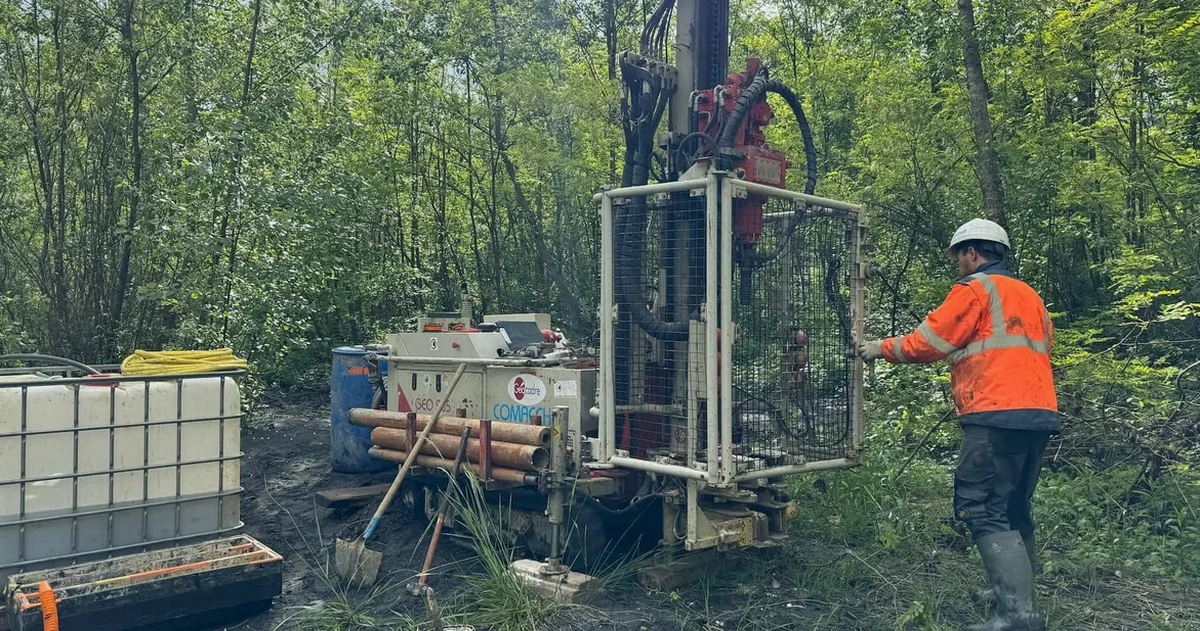
The drilling rig arrives on site in Arlington and the first thing the crew checks is the moisture content of the surface clay. It has been a dry summer, and those cracks running through the topsoil are a telltale sign of what lies beneath. A soil mechanics study begins long before samples reach the lab; it starts with observation of the weathered Eagle Ford Shale that dominates the local geology. The team extracts Shelby tubes from depths of 10 to 20 feet, handling them carefully to preserve the natural structure of the fat clay. Back at the laboratory, technicians begin the index property tests that will define the engineering behavior of the formation. For deeper strata, especially in the southern parts of the city near the floodplain of Village Creek, a CPT test provides a continuous profile of tip resistance and sleeve friction without disturbing the sensitive interbedded sands that can complicate bearing capacity calculations.
In Arlington, the difference between a successful foundation and a distressed one often comes down to correctly identifying the expansive potential of the weathered shale before the first yard of concrete is poured.
Relevant standards
ASTM D2487-17 Standard Practice for Classification of Soils for Engineering Purposes (Unified Soil Classification System), ASTM D4546-14 Standard Test Methods for One-Dimensional Swell or Collapse of Soils, ASTM D4318-17 Standard Test Methods for Liquid Limit, Plastic Limit, and Plasticity Index of Soils, ASTM D2435/D2435M-11 Standard Test Methods for One-Dimensional Consolidation Properties of Soils Using Incremental Loading, International Building Code (IBC) 2021, Chapter 18 Soils and Foundations
Quick answers
How long does a soil mechanics study take in Arlington from drilling to final report?
The field drilling and sampling typically takes one to two days for a standard residential lot. Laboratory testing requires approximately two to three weeks, mainly because the swell-consolidation tests run on a fixed time curve that cannot be accelerated. The final geotechnical report with design recommendations is delivered within three to four weeks from mobilization. During wet winter months, access for the drill rig can add a few days if the site requires track-mounted equipment to avoid rutting in the saturated clay.
What depth of exploration is required for a typical Arlington home foundation?
For a single-family residence on expansive clay, IBC Chapter 18 requires borings to extend at least 15 feet below the proposed foundation elevation, or deeper if compressible or problematic strata are encountered. In practice across Arlington, our borings typically reach 20 to 25 feet to fully characterize the weathered shale and confirm the depth to more competent material. For two-story structures or homes with concentrated column loads, the boring depth is extended to 30 feet to evaluate the stress influence zone.
What does a soil mechanics study cost for a residential project in Arlington?
For a standard residential lot in Arlington, the soil mechanics study ranges from US$3,240 to US$5,080, depending on the number of borings, the depth of exploration, and the specific laboratory testing suite required by the structural engineer. A basic program with two borings and index testing falls at the lower end, while a full characterization with consolidation and swell testing on multiple samples approaches the upper end. Commercial projects with deeper borings and additional chemical testing are priced separately based on scope.
Do I need a soil mechanics study if the builder already has a standard foundation design for Arlington?
A standard or prescriptive foundation design does not eliminate the need for a site-specific soil mechanics study. Arlington's soil conditions change across relatively short distances, especially near drainage features like Johnson Creek or the Trinity River tributaries. IBC Section 1803 requires a geotechnical investigation for all structures unless the building official determines that satisfactory data from adjacent sites is available. Relying on a generic design without verifying the plasticity and swell characteristics of the specific lot exposes the owner to significant risk of foundation movement that is not covered by typical home warranties.