Arlington's development history, from farmland to a dense urban county, has left a patchwork of soils — Piedmont residuum over weathered bedrock mixed with river terrace deposits along the Potomac. These variations directly affect stormwater management. We perform infiltration tests to measure the rate at which water moves into the ground, a critical parameter for designing rain gardens, permeable pavements, and bioretention cells. Our team follows ASTM D3385-18 for double-ring infiltrometer setups and complements the fieldwork with permeability lab tests when low-permeability clay layers are suspected. Understanding the local geology, including the clay-rich textures of the Christiana Complex, is essential for accurate results.
Clay-rich Piedmont residual soils in Arlington can reduce infiltration rates below 0.1 in/hr, requiring alternative stormwater designs.
Methodology and scope
The contrast between the sandy terrace deposits near Rosslyn and the residual clayey silts of the Arlington Ridge is stark. In our experience, infiltration rates can vary by an order of magnitude within a single block. A double-ring infiltrometer isolates vertical flow and provides a direct measurement of hydraulic conductivity near the surface. For deeper assessment, we correlate these field results with granulometry to classify the soil texture. Key parameters we evaluate:
Saturated hydraulic conductivity (Ksat) in cm/hr
Field saturation time and wetting front depth
Soil texture and bulk density influence
Seasonal water table fluctuations
The test procedure involves driving both rings into the ground, maintaining a constant head of water in the inner ring, and recording the falling head in the outer ring to ensure one-dimensional flow.
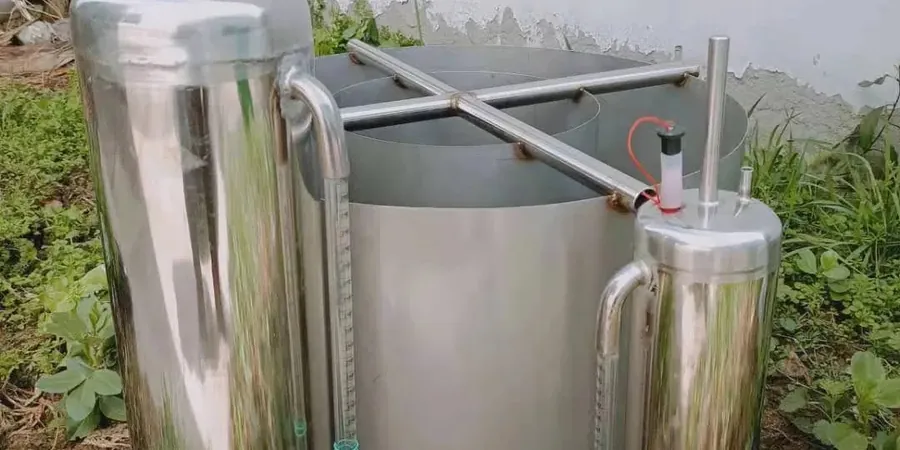
Technical reference image — Arlington
Local considerations
Arlington's humid subtropical climate, with average annual rainfall over 40 inches, demands reliable infiltration data. The primary risk is underestimating the seasonal high groundwater table — a common issue in the lower terraces near Four Mile Run. If the soil is tested during a dry period, the measured rate may be artificially high, leading to undersized stormwater facilities that pond or fail during wet months. We always correlate field infiltration tests with long-term water table monitoring data from nearby wells. Additionally, the presence of buried fill or construction debris from Arlington's redevelopment can produce false high readings if the test pit hits a rubble zone.
Full ASTM D3385-18 procedure with inner/outer ring setup, constant head control, and 2–6 hour monitoring. Delivers Ksat, cumulative infiltration curves, and recommendations for stormwater facility sizing. Ideal for LID projects, bioretention cells, and permeable pavement designs.
02
Porchet Infiltration Test
Simplified single-ring test using a field-drilled borehole. Suitable for preliminary assessments, septic system design, or projects with limited access. Provides rapid infiltration rate estimates under falling head conditions.
Applicable standards
ASTM D3385-18 (Standard Test Method for Infiltration Rate of Soils in Field Using Double-Ring Infiltrometer), Virginia DEQ Stormwater Management Regulations (4VAC50-60), IBC 2021 Appendix C (Soil Classification and Infiltration)
Frequently asked questions
What is the difference between a double-ring and a Porchet infiltration test?
The double-ring infiltrometer isolates vertical flow by using an outer buffer ring, providing more accurate Ksat values following ASTM D3385. The Porchet test is a simpler single-ring method performed in a borehole, giving a bulk infiltration rate that includes lateral flow; it is suitable for preliminary assessments or septic system designs where absolute precision is less critical.
How much does an infiltration test cost in Arlington?
The typical cost for a double-ring infiltrometer test in Arlington ranges from US$270 to US$390 for a single test pit, depending on site access and the number of test locations required. The Porchet test is generally less expensive, starting around US$200. Volume discounts apply for multiple test points.
When is an infiltration test required in Arlington?
Infiltration testing is required for any stormwater management design that relies on infiltration, including bioretention cells, rain gardens, permeable pavement systems, and septic drainfields. Arlington County's Stormwater Management Ordinance mandates field verification of design infiltration rates for all new development and redevelopment projects exceeding 2,500 square feet of impervious area.