Arlington grew fast from its early days as a farming crossroads into a dense urban center. That expansion pushed construction onto steep river terraces and old floodplains along the Potomac. The soil profile here is anything but uniform. We see everything from residual clay over weathered schist to deep alluvial sands near the Four Mile Run corridor. For any project on these deposits, geotechnical instrumentation is the only way to track real-time behavior under load. We design sensor arrays that capture exactly what matters for each site. Our team has installed inclinometers, piezometers, and settlement plates across dozens of Arlington sites. Before we finalize the layout, we often run a [MASW survey](/masw-vs30/) to map shear wave velocity layering and decide where to place borehole instruments. That step saves time and avoids blind spots in the monitoring plan.
We have seen projects in Arlington avoid redesigns costing six figures because early inclinometer data caught a slow-moving slip surface before it became a failure.
Methodology and scope
The contrast between North Arlington and the Route 1 corridor tells you everything about local soil variability. Up near Chain Bridge the ground is shallow residual soil over hard gneiss. Down by Crystal City you find thick layers of terrace gravel and marine clay. A single instrumentation plan cannot serve both zones. For sites on the clay we install vibrating-wire piezometers to track pore pressure during excavation. On the rocky slopes we use tiltmeters and crack gauges to watch for block movement. Each array gets calibrated against site-specific conditions. We also coordinate with the plate load test crew when we need a direct stiffness value to verify settlement predictions against the inclinometer data. The goal is a monitoring network that gives the engineer clear answers, not noise. Our instrumentation designs follow ASTM D5092 for piezometer installation and IBC Chapter 17 for performance monitoring thresholds.
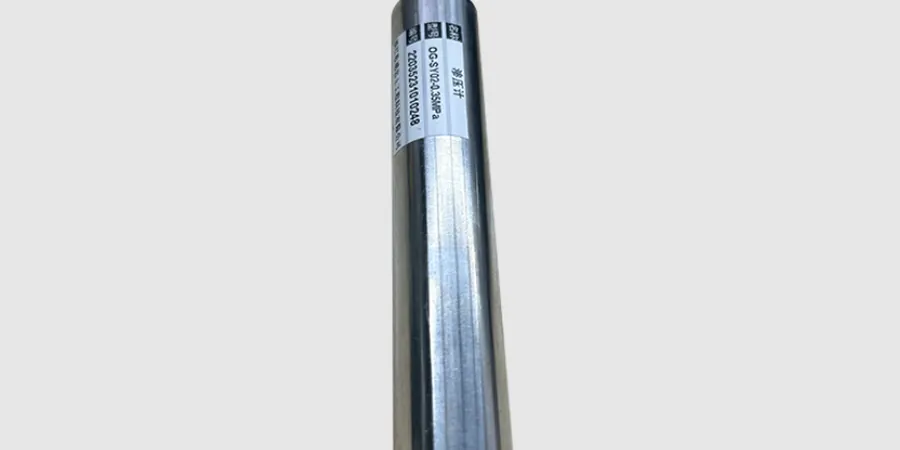
Technical reference image — Arlington
Local considerations
A common mistake we see in Arlington is skipping early instrumentation on shored excavations near existing buildings. Developers want to save the budget for later phases. Then a row of townhouses on Army Navy Drive starts showing diagonal cracks in the brick veneer. The contractor has no data to prove the shoring is performing as designed. Lawyers get involved. We have seen that scenario play out three times in the last two years. Installing inclinometers and piezometers before the first bucket of soil moves gives you a defensible baseline. Without it you are guessing. And guessing on Arlington's mixed geology costs real money. Our instrumentation packages start at the planning stage, not after something moves.
We install vertical and horizontal inclinometer casings to track lateral movement in slopes and excavations. Our crews grout casings in place and take baseline readings before any construction load is applied. Data is processed within 24 hours of each survey round.
02
Piezometer Networks
Vibrating-wire and standpipe piezometers are placed at targeted depths to monitor pore water pressure. We design the layout based on stratigraphy from our boreholes. Each installation includes a barometric compensation logger for accurate long-term trends.
03
Settlement Monitoring Arrays
We set up settlement plates, multipoint borehole extensometers, and surface optical targets to measure vertical movement. Reference benchmarks are tied to deep rod extensometers founded below the active zone. Weekly reports include plots of settlement versus time and load.
04
Data Acquisition and Remote Telemetry
Our data loggers collect readings from all sensors and transmit them to a secure web portal. Alarms trigger via email or SMS when thresholds are exceeded. The system runs on battery with solar backup for sites without power access.
Applicable standards
ASTM D5092-04 Standard Practice for Design and Installation of Groundwater Monitoring Wells, IBC 2021 Chapter 17 Structural Tests and Special Inspections, FHWA-NHI-10-034 Geotechnical Instrumentation for Monitoring Field Performance
Frequently asked questions
What geotechnical instrumentation is most common for Arlington's residential basement excavations?
For basements in Arlington's clay and terrace gravel, we typically install one inclinometer at each side of the excavation and two vibrating-wire piezometers at different depths. That combination catches lateral wall movement and pore pressure buildup. We also set settlement points on adjacent structures to confirm no movement exceeds 0.5 inches.
How much does a full instrumentation program cost for a mid-size commercial site in Arlington?
A typical program covering three inclinometers, five piezometers, and settlement monitoring across 12 points ranges from US$2,650 to US$4,090 depending on sensor type, drilling depth, and monitoring duration. That includes installation, baseline readings, and four progress reports. Telemetry and remote alarms add to the base price.
How long does it take to install an inclinometer array in Arlington's soil conditions?
Drilling and grouting one inclinometer casing takes about four hours in the residual clay and up to six hours if we hit schist layers. A full array of three casings with surface survey is usually completed in two days. We schedule baseline readings 24 hours after grouting to let the grout set.
Can you retrofit instrumentation on an existing retaining wall in Arlington?
Yes, we have retrofitted walls along Langston Boulevard and Williamsburg Boulevard. We drill through the wall face and install inclinometer casing in the backfill, or mount tiltmeters directly on the wall stem. Piezometers are placed in new boreholes behind the wall. The data helps determine if the wall needs tieback anchors or drainage improvements.